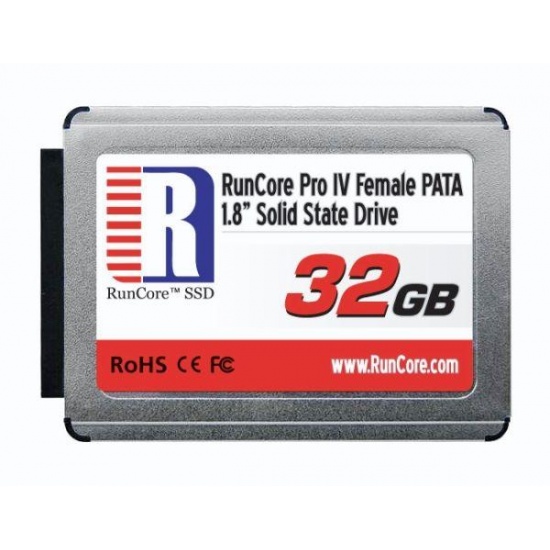
RunCore Pro IV 1.8" Female PATA SSD incorporates advanced flash controller and NAND flash memory technology to deliver a state-of-the-art, non-volatile mass storage device. It supports capacity from 16GB to 128GB. 1.8" IDE SSD contains the cache size of up to 64MB with maximum transfer rate as high as 80MB/s. Furthermore, it's characteristics of low power consumption and anti-vibration are obvious.
RunCore Pro IV 1.8" PATA IDE SSD as standard PATA driver, which supports all major operating systems such as Windows 9X/Me/NT/XP/CE/Vista/Windows7, MAC, Linux and Unix, Solaris, Vxworks. Therefore, it is an ideal storage device for commercial users' mobile PC.
Easy 3 Step Do-It-Yourself Upgrade
All RunCore Pro V SSDs offer upgrading made easy with our simple 3 Step Do-It-Yourself upgrade package, which gives you all the tools you need and simplifies the process so that even a novice computer user can easily complete it.
1. Plug the RunCore SSD drive into an available USB port.
2. Run the included cloning software.
3. Install the SSD and enjoy.
It's that easy!
The upgrade package includes a High Speed USB 2.0 HDD case and cables to clone your existing drive and turn it into an external USB drive, a 15 Day Free Trial of Acronis Migrate Easy for PC and Carbon Copy Cloner for Mac, and screwdriver.
Typical Applications
* SONY series laptop
* TOSHIBA series laptop
Advance Wear-Leveling Algorithm
The NAND flash devices are limited by a certain number of write cycles. When using a file system, frequent file table updates is mandatory. If some area on the flash wears out faster than others, it would significantly reduce the lifetime of the whole device, even if the erase counts of others are far from the write cycle limit. Thus, if the write cycles can be distributed evenly across the media, the lifetime of the media can be prolonged significantly. The scheme is achieved both via buffer management and specific advanced wear leveling to ensure that the lifetime of the flash media can be increased, and the disk access performance is optimized as well.
S.M.A.R.T Function
S.M.A.R.T. is an acronym for Self-Monitoring, Analysis and Reporting Technology, an open standard allowing disk drives to automatically monitor their own health and report potential problems. It protects the user from unscheduled downtime by monitoring and storing critical drive performance and calibration parameters. Ideally, this should allow taking proactive actions to prevent impending drive failure. SMART feature adopts the standard SMART command B0h to read data from the drive. When the SMART Utility running on the host, it analyzes and reports the disk status to the host before the device is in critical condition.
Built-in Hardware ECC
The ATA-Disk Module uses BCH Error Detection Code (EDC) and Error Correction Code (ECC) algorithms which correct up to eight random single-bit errors for each 512-byte block of data. High performance is fulfilled through hardware-based error detection and correction.
Specifications:
Cache 64MB
Interface Female PATA (50 Pin Connector)
NAND Flash MLC
Write Rate Max* 79MB/s
Read Rate Max* 85MB/s
Random 4K Read Rate* 25MB/s
Random 4K Write Rate* 6MB/s
Operation Temperature 0°C to 70°C
Dimension 74.5mm x 54.2mm x 5mm
Weight* < 30g
Data Retention 10 Years
ECC Correction 10,000 R/W
Voltage Input 3.3V ± 5%
Power Consumption* Typical: < 1.6W
Idle: < 0.5W
Write Endurance >
80years@10GB write/day
Read Endurance Unlimited
MTBF > 1,000,000 Hours
Flash Management Bad Block Management
Dynamic and static wear-leveling
Defect management
Sudden power-off recovery
Regulations RoHS-6 Compliant

 1TB Kingston Technology KC3000 M.2 PCI Express 4.0 Solid State Drive
 960GB Axiom 2.5Inch SAS V-NAND TLC Internal Solid State Drive
 250GB Samsung 870 EVO 2.5-Inch Serial ATA III V-NAND Internal Solid State Drive
 250GB PNY CS1030 M.2 NVMe Internal SSD
 1TB Kingston KC600 2.5-inch Serial ATA III Internal Solid State Drive
 480GB Kingston A400 2.5 Inch Serial ATA III Internal Solid State Drive
 2TB Axiom 3.5 Inch Serial ATA Internal Solid State Drive
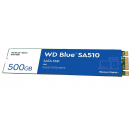 500GB Western Digital Blue SA510 M.2 Serial ATA III Internal Solid State Drive
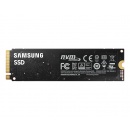 1TB Samsung 980 M.2 PCI Express 3.0 V-NAND NVMe Internal Solid State Drive
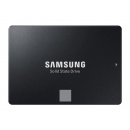 4TB Samsung 870 EVO 2.5-Inch Internal Solid State Drive - Black
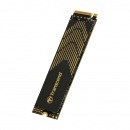 1TB Transcend M.2 2280 PCIe Gen4 x4 NVMe SSD 240S
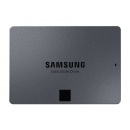 8TB Samsung 870 QVO 2.5-inch Serial ATA III V-NAND MLC Internal Solid State Drive
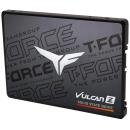 512GB Team Group T-FORCE VULCAN Z 2.5 Inch Serial ATA III 3D NAND Internal Solid State Drive
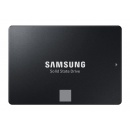 1TB Samsung 870 EVO 2.5-Inch Internal Solid State Drive
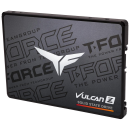 256GB Team Group T-Force Vulcan Z 2.5 Inch Serial ATA III 3D NAND Internal Solid State Drive